New keyhole approach to treating heart valve disease
Sydney Heart Team is evaluating a new device designed to treat a common condition that can lead to heart failure. Tricuspid regurgitation occurs when the…

In recent years, surgical valve replacement and the placement of clips have been used to treat the condition, but open-heart surgery can carry substantial risks for many patients, particularly older patients or those with advanced heart failure. In other cases, current valve clipping devices are not suitable because the valve leaflets are too far apart or the anatomy is too complex.
The Pivot Extend system is a new device that represents a different approach to treating tricuspid regurgitation. Rather than replacing the valve or clipping the leaflets together, the device places an expandable spacer within the opening of the leaking tricuspid valve itself.
Professor Martin Ng says the device occupies the space where the blood is leaking, reducing backward flow and providing a new surface for the leaflets to come together against the spacer.
“Tricuspid regurgitation is a very common, serious heart valve condition associated with increased mortality and disability,” he says.
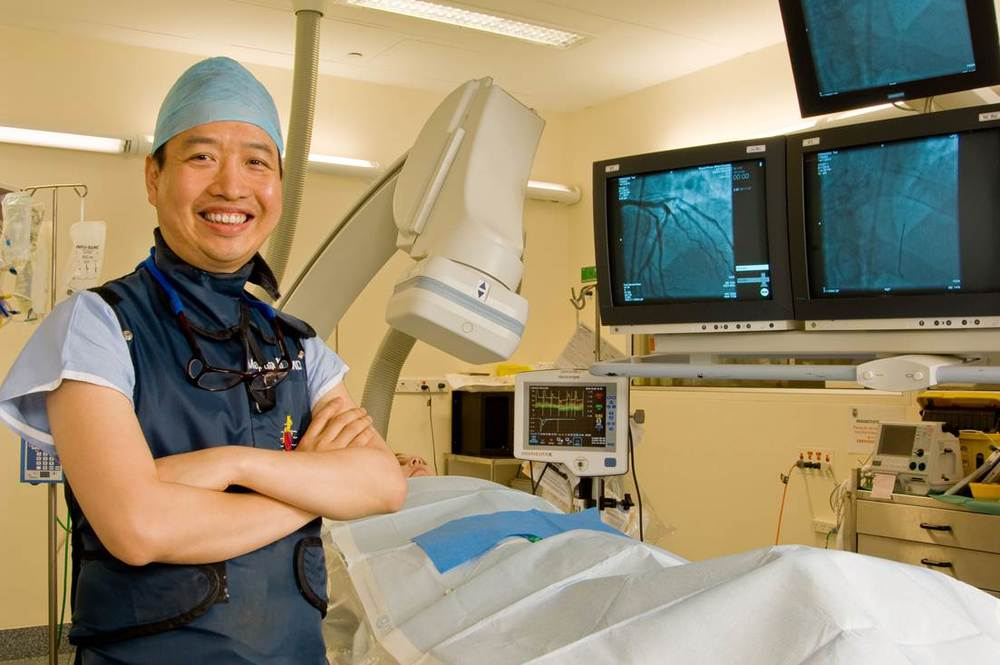
Prof Ng is leading a world-first clinical trial at Macquarie University Hospital of the Pivot Extend device for patients with severe tricuspid regurgitation.
“We are evaluating the device, which is implanted through a catheter in the femoral vein, for people who have limited options and are potentially facing eventual heart failure.
“This process is gentler on the heart because suddenly eliminating long-standing tricuspid regurgitation can place stress on the already weakened right ventricle. By reducing leakage in a controlled manner, the device may help avoid sudden strain on the heart and allow the right ventricle time to recover.”
Professor Ng says the first three patients treated in the trial were not suitable candidates for valve clips but had advanced symptoms. All patients have recovered well and have experienced significant improvements in their symptoms.